


The Kwame Nkrumah University of Science and Technology (KNUST), through its Responsible Artificial Intelligence Laboratory (RAIL), is using artificial intelligence to solve practical problems in key sectors such as agriculture, health, energy, water and education.
The project is also promoting disability inclusion through innovations such as “SignTalk”, a tool designed to improve communication between health workers and people with hearing impairment.
The Principal Investigator and Scientific Director of the Responsible AI Lab, Prof. Jerry John Kponyo, disclosed this in an interview with GBCGhanaOnline during a recent capacity-building workshop for journalists and content creators in Accra.
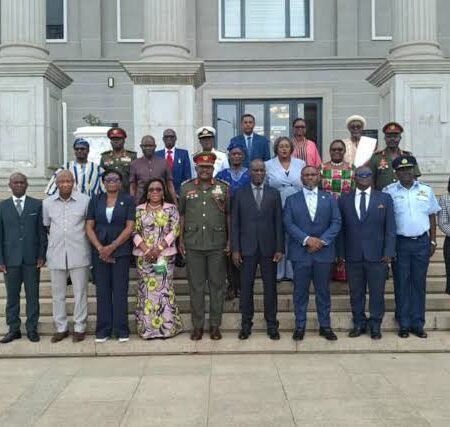
The four-day training was organised by the British High Commission in Accra in partnership with the Responsible AI Lab at KNUST, the Ministry of Environment, Science and Technology, and the Ministry of Communications, Digital Technology and Innovations.
It aimed to strengthen collaboration between scientists and the media so that research and innovation can be better explained to the public.
Prof. Kponyo said the lab is developing solutions that can improve lives and support sustainable development in Ghana.
In agriculture, he said AI is helping to detect crop diseases faster and more accurately.
“Previously, it took weeks to assess farm conditions. Now, by leveraging AI and large datasets, we can identify problems within seconds,” he said.
He added that the system can recommend solutions and communicate them to farmers in local languages.
The lab is also working on weather prediction tools to support farming.
“We are working to accurately predict rainfall patterns by combining indigenous knowledge with data from the Meteorological Agency, helping farmers decide when to plant,” Prof. Kponyo said.
In the health sector, he said the lab is using AI to generate MRI images from CT scans, a development that could reduce cost and improve access to diagnosis.
He added that the technology can also support quicker detection of conditions such as brain tumours.
Prof. Kponyo said AI is also being used to support the diagnosis of rare diseases by analysing genetic and medical data to help doctors identify conditions earlier.
On disability inclusion, he said the “SignTalk” tool can translate sign language into speech for doctors and convert spoken responses into sign language through an avatar.
“The system translates sign language into speech for doctors and converts spoken responses into sign language through an avatar,” he explained.
The lab has also developed an intelligent white cane called “I See” to support visually impaired persons. According to him, the device provides real-time information about surroundings and communicates in local languages to improve mobility and independence.
Prof. Kponyo called for stronger collaboration between universities, government and industry to help scale up such innovations and extend their benefits to more people.
He also urged journalists to pay more attention to science and technology reporting.
“Our impact is measured by how we transform lives, not just by profit,” he said.
The KNUST initiative highlights the growing role of artificial intelligence in addressing local development challenges and improving inclusion in Ghana.