

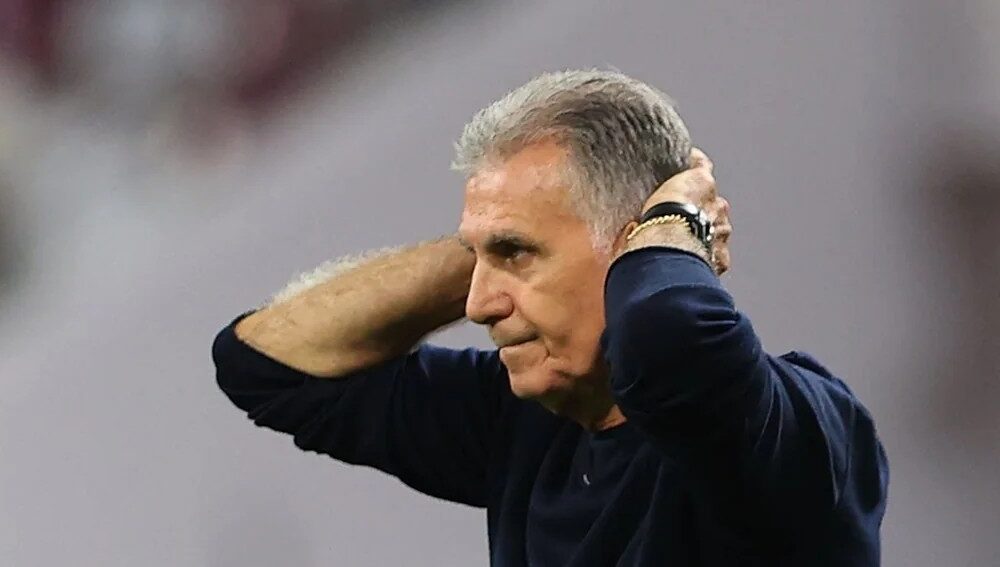
The appointment of Carlos Queiroz as head coach of the Black Stars ahead of the 2026 FIFA World Cup has been welcomed in some quarters as a move for experience and stability.
However, a closer look at his World Cup record suggests that Ghana may need to manage expectations realistically, especially given the timing of his appointment.
Late Appointment: A Familiar Risk
One of the most telling indicators comes from Queiroz’s most recent World Cup experience with Iran in 2022.
He returned to the team just a few months before the tournament, with limited preparation time. The result was a mixed and ultimately disappointing campaign, highlighted by a heavy 6–2 defeat to England in the opening match — worrying precedent as Ghana is set to face the same opponent in the group stage of the 2026 World Cup.
The pattern is difficult to ignore.
Ghana now finds itself in a similar situation — appointing Queiroz just months before the World Cup — raising legitimate concerns about whether there is enough time to build cohesion, implement tactics, and prepare the squad adequately.
Experience vs Results
There is no doubt that Queiroz brings vast experience. He has coached at five World Cups and worked with top players, including Cristiano Ronaldo during his time with Portugal.
Yet, even with one of the world’s best players at his disposal, his best World Cup finish remains the Round of 16 in 2010.
Across his five World Cup appearances:
- He has progressed beyond the group stage only once
- His teams have exited at the group stage four times
This record raises questions about his ability to deliver results at the highest level, particularly in high-pressure tournaments.
Ghana’s Own World Cup Benchmark
Ghana’s football history adds another layer to the discussion.
The Black Stars reached the quarter-finals of the 2010 FIFA World Cup, coming within a penalty shootout of becoming the first African team to reach the semi-finals.
That performance set a benchmark — one that remains unmatched.
Yet, since then, Ghana has struggled to replicate that success, and the current appointment does not clearly signal a departure from that trend.
A Pattern of Group Stage Exits
Queiroz’s record suggests a recurring pattern: well-organised teams that compete but often fall short of progression.
His teams are typically disciplined defensively, but frequently lack the attacking edge required to secure crucial wins.
With Ghana drawn in a challenging group that includes England, Croatia and Panama, the risk of another group stage exit cannot be overlooked.
A Reality Check for Ghana
This is not to dismiss Queiroz’s capabilities entirely. His experience, organisational skills, and ability to manage teams in difficult situations are well documented.
However, history shows that:
- Short preparation periods have led to weaker performances
- Even with elite players, progression has been limited
- Group stage exits have been the norm rather than the exception
Hope with Caution
The Ghana Football Association has made a calculated decision in appointing Queiroz, prioritising experience ahead of the World Cup.
But experience alone may not be enough.
If past patterns are anything to go by, Ghana must approach the 2026 tournament with measured expectations, recognising that replicating or surpassing the 2010 quarter-final achievement will require more than just experience — it will demand preparation, cohesion, and execution at the highest level.