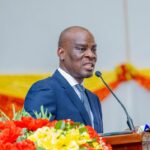


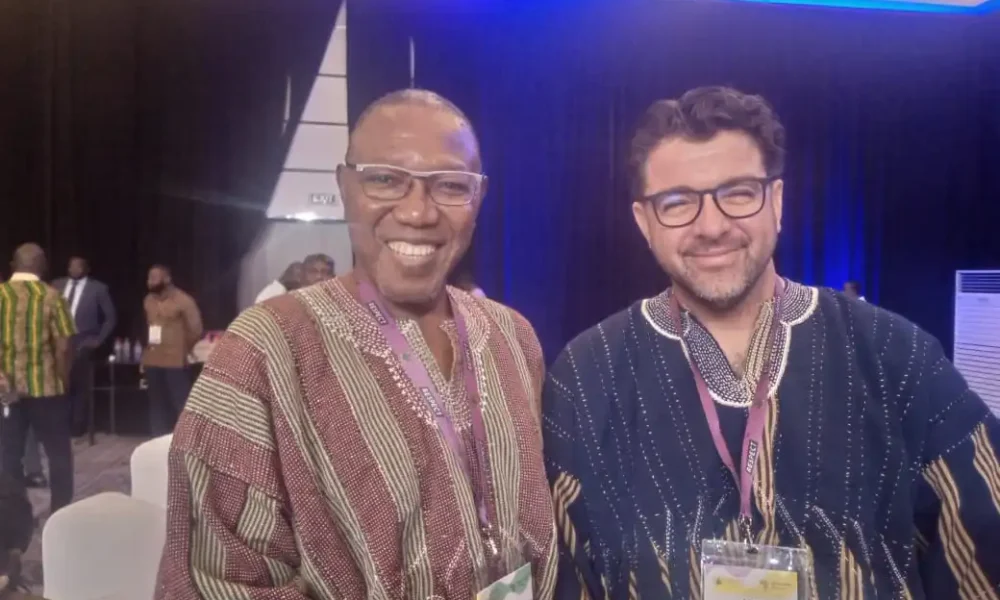
Namibia’s Deputy Minister of Education, Innovation, Youth, Sports, Arts and Culture, Dino Ballotti, has described Ghana as a leader in educational transformation, praising the country’s commitment to innovation, digital learning, and technology-driven reforms.
Speaking in an exclusive interview on the sidelines of the 18th Ministerial Round Table of eLearning Africa in Accra, Mr. Ballotti said Ghana is setting the benchmark for education development on the continent.
“This is my second visit to Ghana. First time was last year and I must say that in an African context, Ghana are really setting the trend, setting the bar when it comes to intentionality around education,” he said.
The Namibian Deputy Minister commended Ghana’s efforts to modernise its education system through investments in e-learning, digital education, and Fourth Industrial Revolution (4IR) initiatives.
According to him, Ghana’s leadership in these areas is helping to shape educational discussions and policy direction across Africa.
“On behalf of my country, Namibia, we are not only excited, but we are most appreciative of Ghana consistently advocating for advances in education, whether that be 4IR, whether that be e-learning,” he stated.
Mr. Ballotti noted that Ghana’s approach offers valuable lessons for other African countries seeking to build future-ready education systems capable of responding to rapid technological change.
“I remain most impressed and I think Ghana are the catalyst for what we are trying to achieve as a continent,” he added.
The Deputy Minister explained that one of the reasons for attending the conference was to learn from the experiences of participating countries and institutions and identify best practices that could be adapted to Namibia’s education system.
Referencing the late Namibian President Hage Geingob, he remarked that he had come to Ghana to “steal with my eyes and with my ears,” describing the conference as an important platform for learning, collaboration, and innovation.
Beyond technology, Mr. Ballotti stressed the importance of sustained investment in education, arguing that meaningful reforms require adequate funding and political commitment.
“When we talk about resourcing education, I think that’s the advocacy work that Namibia can say. Thirty-two percent of our national budget goes toward education,” he said.
He urged African governments to prioritise education financing, noting that countries that invest consistently in education are better positioned to achieve sustainable development and economic transformation.
The 18th Ministerial Round Table brought together ministers, policymakers, development partners, educators, and technology experts from across Africa to discuss strategies for strengthening digital learning and preparing education systems for the future.