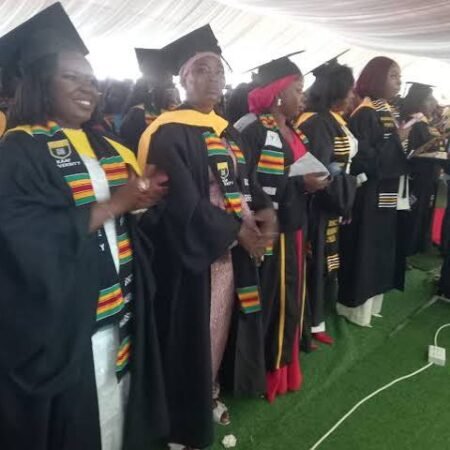


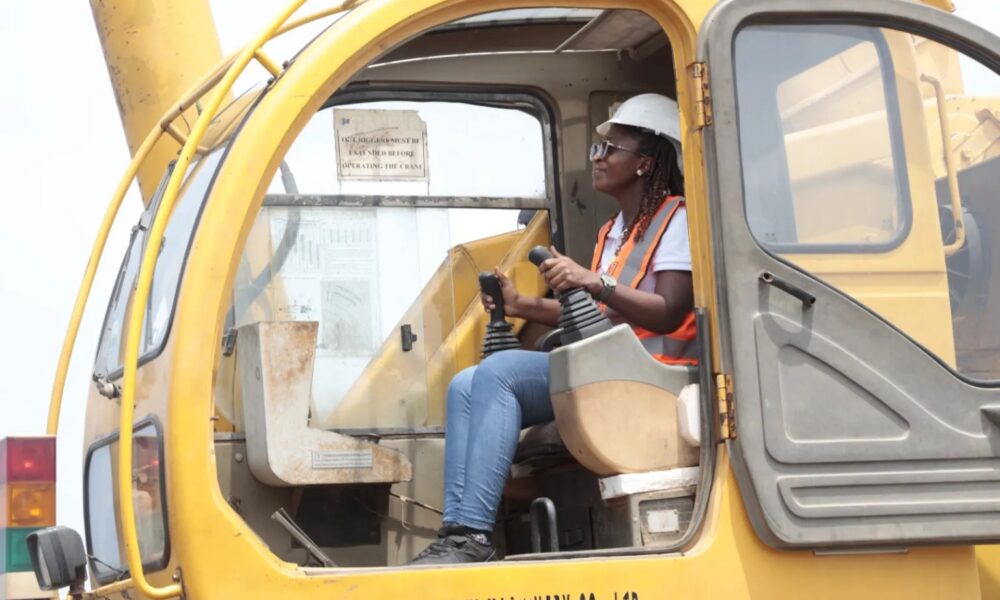
The Ministry of Youth Development and Empowerment has reaffirmed the government’s commitment to equipping young people with practical and industry-relevant skills, describing skills development as a critical pillar of Ghana’s economic transformation and sustainable growth.
Speaking on behalf of the Minister for Youth Development and Empowerment at the 10th Cohort Graduation Ceremony of Forklift and Mobile Crane Operators, the Deputy Director-General for Administration, Reine Adzo Agbo, said countries that achieve rapid economic progress do so by investing in the skills and talents of their youth.
Addressing graduates, industry stakeholders, and development partners, she noted that Ghana’s development ambitions cannot be realised through academic qualifications alone but require a workforce equipped with technical and vocational competencies that meet industry demands.
“Practical and technical skills are essential for reducing unemployment, increasing productivity, fostering innovation and creating sustainable livelihoods,” she said.
According to her, sectors such as construction, mining, maritime services, logistics, manufacturing, transportation, and infrastructure development depend heavily on skilled operators and technicians.
Mrs. Agbo commended the graduating forklift and mobile crane operators for acquiring skills that position them to contribute meaningfully to Ghana’s industrialisation agenda and national development.
She also highlighted key government interventions aimed at empowering young people, including the Adwumawura Programme, which supports youth entrepreneurship through training, mentorship, business incubation, and market access, as well as the National Apprenticeship Programme, which provides practical training and pathways to employment and self-employment.
The graduation ceremony, jointly organised by the National Association of Heavy-Duty Equipment Operators Ghana (NAHDEOG) and the Regional Maritime University (RMU), celebrated the graduation of 74 trainees, comprising 32 forklift operators, 35 mobile crane operators, and seven excavator operators.
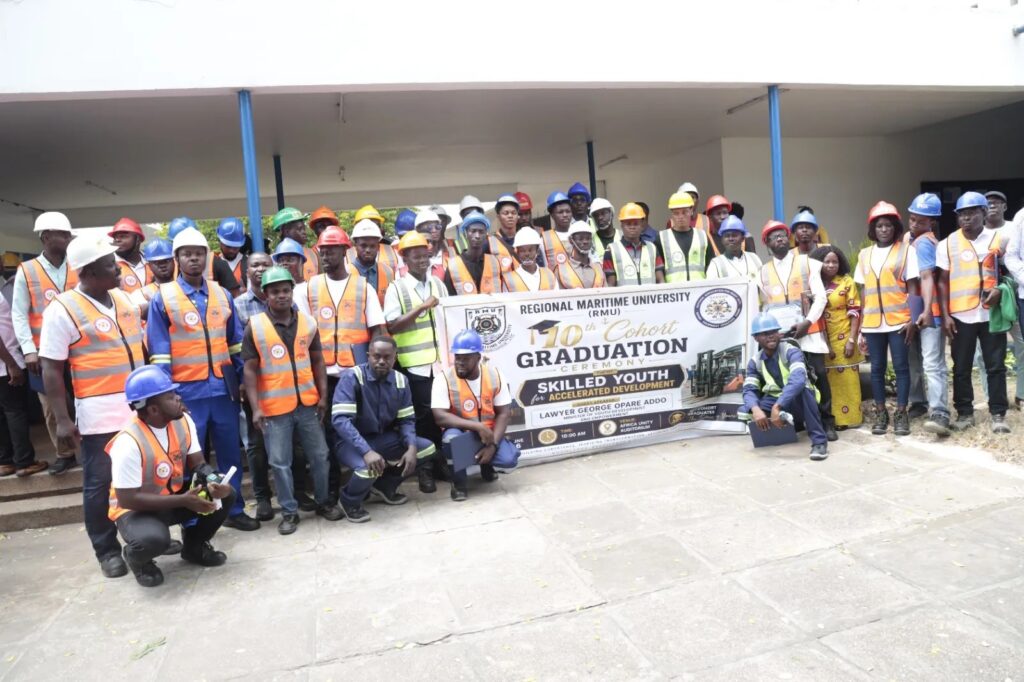
Vice-Chancellor of RMU, Prof. Jethro W. Brooks, described the graduates’ achievement as a significant investment in their future and emphasised that Ghana’s development depends on a skilled workforce capable of making immediate contributions in critical sectors.
Speaking on the theme, “Skilled Youth for Accelerated Development,” Prof. Brooks noted that Africa’s expanding infrastructure needs require competent equipment operators to support construction, logistics, ports, oil and gas, mining, and industrial operations.
“Economic growth is driven by skills and productivity,” he said, urging graduates to pursue continuous learning and uphold high standards of safety, integrity, and professionalism.
The President of NAHDEOG, Dominic Kofi Eyiah, also underscored the importance of technical and vocational training in national development and appealed for heavy-duty equipment operation training to be incorporated into future phases of the National Apprenticeship Programme.
According to him, Ghana’s construction, mining, agriculture, logistics, and industrial sectors continue to face a shortage of professionally trained operators despite growing demand for specialised equipment personnel.
He argued that integrating heavy-duty equipment training into national skills programmes would help create jobs, address critical skills gaps, improve workplace safety, and accelerate industrial growth.
The ceremony concluded with a call for stronger collaboration among government, academia, and industry to expand skills development opportunities for Ghanaian youth and build a highly skilled workforce capable of driving national development and economic competitiveness.