

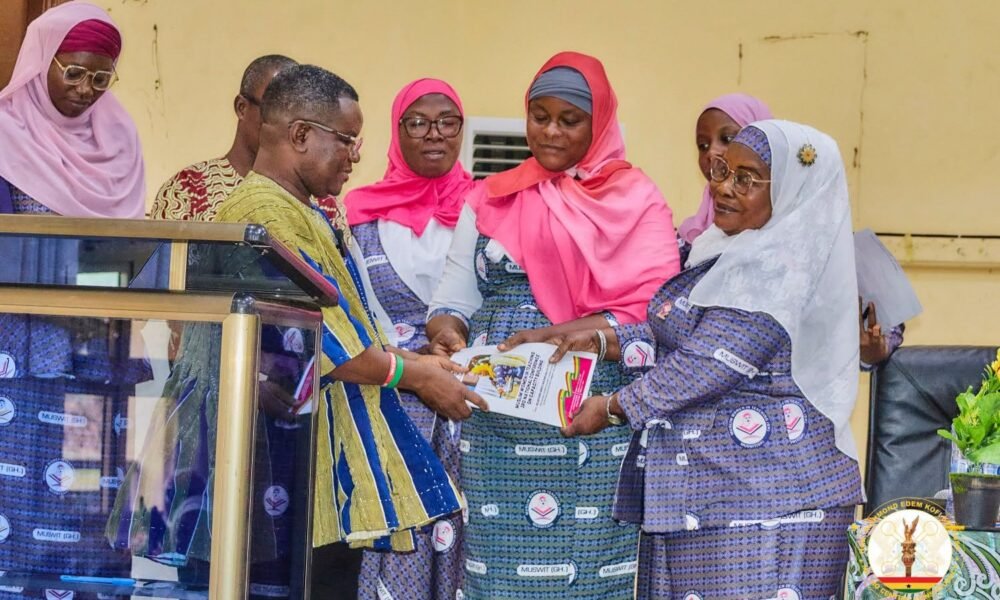
The Member of Parliament for Ho Central, Richmond Edem Kofi Kpotosu, has called for increased investment in women teachers and practical nutrition education in basic schools to improve learning outcomes and promote the healthy development of children.
He said equipping women educators with the knowledge and resources to promote good nutrition could positively influence pupils’ health, academic performance and overall development.
Mr Kpotosu made the call when he joined the Muslim Women in Teaching, Ghana (MUSWIT/GH) for a programme on the theme, “Nourishing Minds, Nourishing Futures: Advancing Practical Nutrition Education in Basic Schools in Ghana through Women Teacher Leadership.”
Speaking to the Ghana News Agency (GNA) during the programme, the MP said proper nutrition plays an important role in children’s ability to learn, while teachers are well positioned to influence healthy behaviours among pupils.
He noted that women teachers perform responsibilities beyond classroom instruction, including nurturing children, shaping character and encouraging healthy choices.
Mr Kpotosu therefore called on the government, Parliament, civil society organisations, educational institutions and development partners to support initiatives that combine nutrition education with women’s leadership in schools.
“When we nourish children, we fortify classrooms. When we empower teachers, we strengthen the nation. When we uplift women, we empower future generations,” he said.
He also expressed his readiness to support future activities of MUSWIT/GH and commended Muslim women teachers for their contribution to education and national development.
The Volta Regional Manager of the Islamic Education Unit and Regional Patron of MUSWIT/GH, Hajia Samira Abdul Mumin, also called for stronger stakeholder support for Islamic education and the development of Muslim communities.
She said sustained collaboration among stakeholders was necessary to address the educational, social and developmental needs of the Islamic community.
Hajia Abdul Mumin added that empowering women teachers would have benefits beyond individual schools by contributing to the development of families and communities.
The programme brought together Muslim women teachers, education stakeholders and other partners to discuss practical approaches to integrating nutrition education into basic school learning while strengthening women’s leadership in education.
Other GCNews