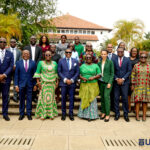


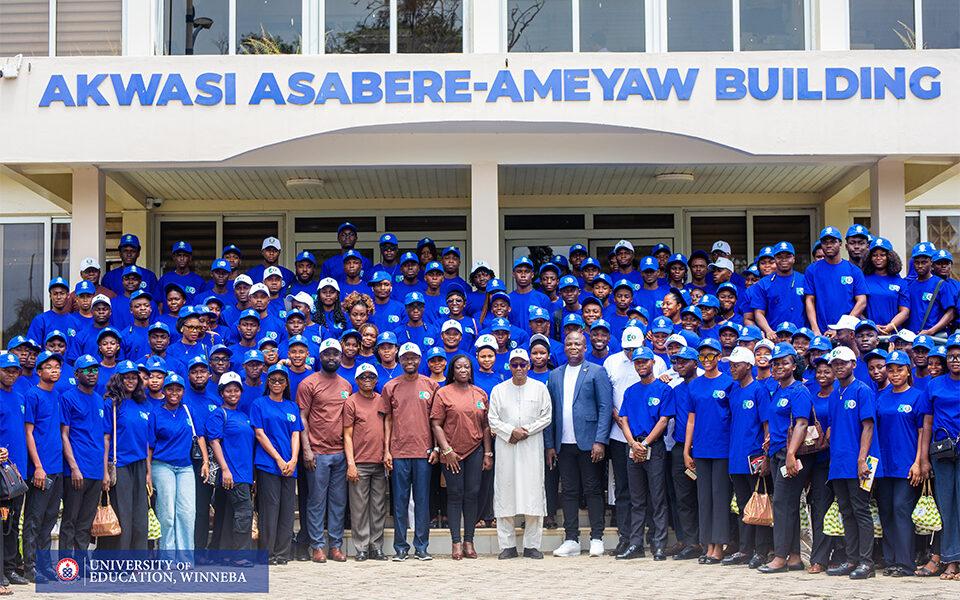
The School of Business (SoB) at the University of Education, Winneba (UEW) has hosted a youth engagement programme to mark the 50th anniversary of the Economic Community of West African States (ECOWAS), urging students to play a pivotal role in advancing regional integration and development.
The event, held at the North Campus Mini-Conference Room on Wednesday, March 4, 2026, formed part of activities commemorating “ECOWAS @ 50.” It sought to sensitise students to the achievements of the regional bloc over the past five decades and inspire them to champion economic transformation, peacebuilding and cross-border collaboration in West Africa.
Chairing the programme, Professor Rebecca Akpanglo-Nartey, Principal of the College of Languages Education, described the golden jubilee as an opportunity for both reflection and strategic reassessment.
She recalled that ECOWAS was established on May 28, 1975, through the signing of the Treaty of Lagos, which aimed to promote economic integration, regional cooperation and improved living standards across West Africa.
Professor Akpanglo-Nartey emphasised that in the current global environment characterised by geopolitical tensions, energy market volatility and supply chain disruptions, regional integration has become a strategic necessity rather than an option.
With more than 60 percent of West Africa’s population under the age of 25, she underscored the importance of empowering young people and promoting women-led enterprises.
She further indicated that UEW, through the School of Business and the UEW Innovation Hub, is ready to collaborate with ECOWAS in nurturing innovators and enterprise leaders capable of competing across regional markets.
The Dean of the School of Business, Professor Richard Oduro, noted that the University was honoured to partner ECOWAS in engaging the next generation of regional leaders.
He observed that although ECOWAS has played a critical role in promoting democratic governance and mediating conflicts within the sub-region, its mandate has become even more urgent amid rising global uncertainty, inflationary pressures and youth unemployment across member states.
Professor Oduro cited Ghana’s recent macroeconomic challenges, including high inflation and exchange rate volatility, as evidence of the need for strong regional frameworks to ensure economic stability.
He proposed three strategic priorities for the next phase of ECOWAS’ development: economic diversification to reduce dependence on commodity exports, digital regionalism through harmonised fintech systems and cross-border innovation ecosystems, and youth-centred development that integrates young people into regional policymaking and enterprise governance.
Delivering the keynote address, Ambassador Mohammed Lawan Gana, the ECOWAS Resident Representative in Ghana, stated that the ECOWAS @ 50 celebrations are deliberately focused on the youth, who represent the future of the region.
He traced the origins of the regional bloc to the vision of fifteen Heads of State and Government who signed the Treaty of Lagos, noting that many of them were relatively young leaders who prioritised unity despite linguistic and political differences.
Ambassador Gana highlighted the organisation’s Vision 2050, which seeks to transition from an “ECOWAS of States” to an “ECOWAS of People: Peace and Prosperity for All.”
The vision is anchored on five key pillars: peace and security, democracy and rule of law, economic integration and interconnectivity, inclusive and sustainable development, and social inclusion.
He also outlined several ongoing initiatives under ECOWAS, including digital technology training programmes for Ghanaian youth, partnerships with innovation hubs, health interventions through the West African Health Organisation and infrastructure projects such as the Lagos–Abidjan Highway corridor.
While acknowledging the recent withdrawal of Burkina Faso, Mali and Niger from the bloc, Ambassador Gana reaffirmed ECOWAS’ commitment to dialogue and regional unity.
The programme concluded with a call for students to actively position themselves as stakeholders in West Africa’s integration agenda by leveraging opportunities within ECOWAS frameworks in trade, innovation and cross-border entrepreneurship to help build a peaceful, prosperous and globally competitive region over the next 50 years.