



President John Dramani Mahama has unveiled Ghana’s National Artificial Intelligence Strategy, backed by a $270 million investment, aimed at driving job creation and innovation across the country.
Speaking at the launch in Accra on Friday, April 24, 2026, President Mahama described the strategy as a major step towards building a digitally advanced and competitive economy.
“This is a significant milestone in our national journey towards a digitally empowered, innovation-driven and globally competitive Ghana,” he said.
Focus on Jobs and Economic Growth
The President said the strategy is designed to use artificial intelligence to create jobs, boost economic growth, strengthen public institutions and promote inclusive development.
“It is also a statement of intent that Ghana will not be a passive consumer of technologies shaping the future, but an active participant in designing, governing and deploying them for national transformation,” he stated.
$250 Million for AI Infrastructure
A key part of the plan is the establishment of a National AI Computing Centre, which will receive $250 million in funding.
An additional $20 million has been allocated to support the early stages of implementation.
The strategy is expected to run over a 10-year period, with the goal of making Ghana an AI-enabled society by 2035.
New Institutions to Lead Implementation
The plan includes the creation of a National AI Office under the Ministry of Communication, Digital Technology and Innovation to coordinate implementation.
A National AI Fund will also be established to support research, innovation and long-term development.
Impact Across Key Sectors
The Minister for Communication, Digital Technology and Innovation, Samuel Nartey George, said artificial intelligence is already transforming sectors such as healthcare, agriculture, education and finance.
He noted that the strategy should be seen as a tool for national development rather than just a technological upgrade.
What This Means for Students and Jobs
The new AI strategy is expected to open up new career opportunities for students in fields such as data science, software engineering, cybersecurity and digital innovation.
Students in universities and technical institutions may see more AI-related courses, training programmes and research opportunities, as government invests in digital skills development.
The focus on AI is also likely to increase demand for tech skills across different industries, meaning students who build digital and problem-solving skills could have better chances of employment.
In addition, partnerships between government, industry and educational institutions may create internships, scholarships and job pathways for young people.
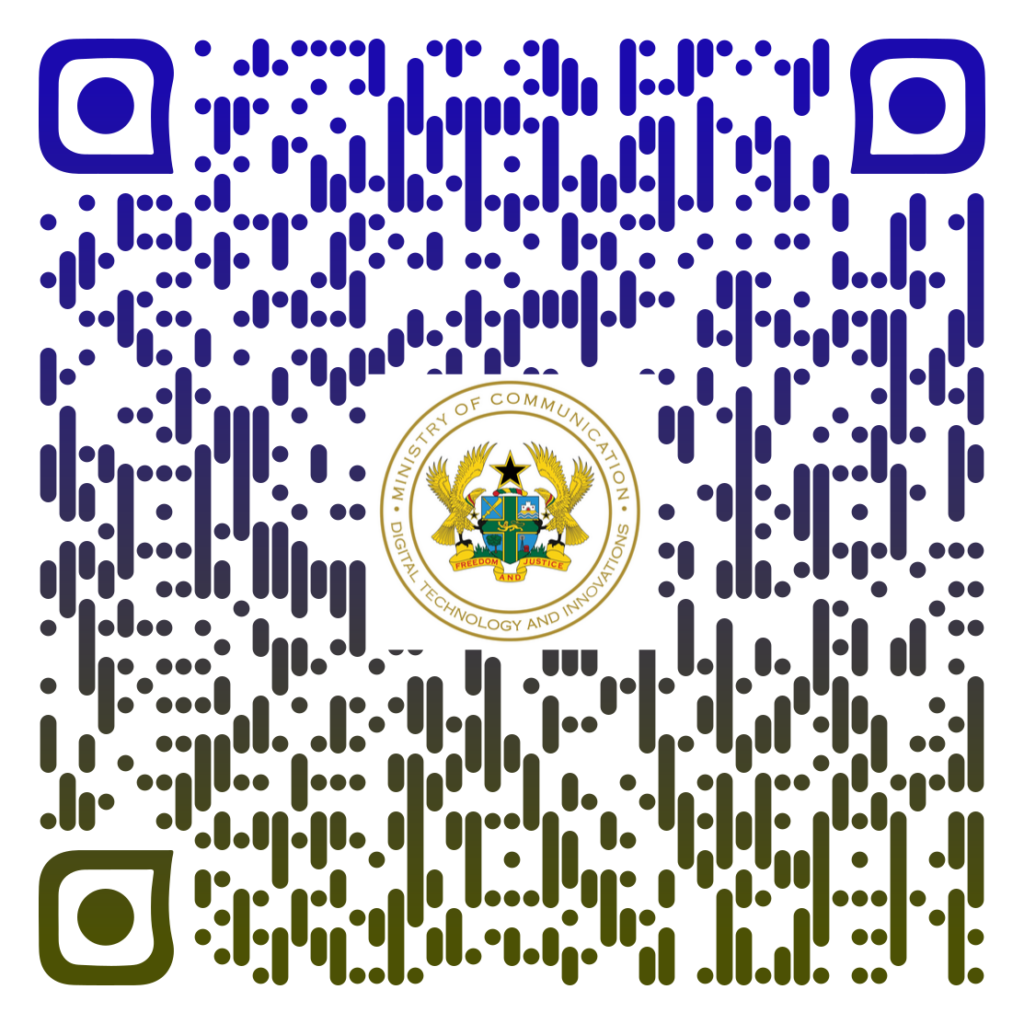
Scan for a copy of the National AI Strategy:
Other GCNews