

Renowned Ghanaian-British architect Sir David Adjaye has offered a rare public explanation of the vision behind Ghana’s proposed National Cathedral, describing it as a project intended to serve not only as a place of worship but also as a major economic, cultural, and civic asset for the country.
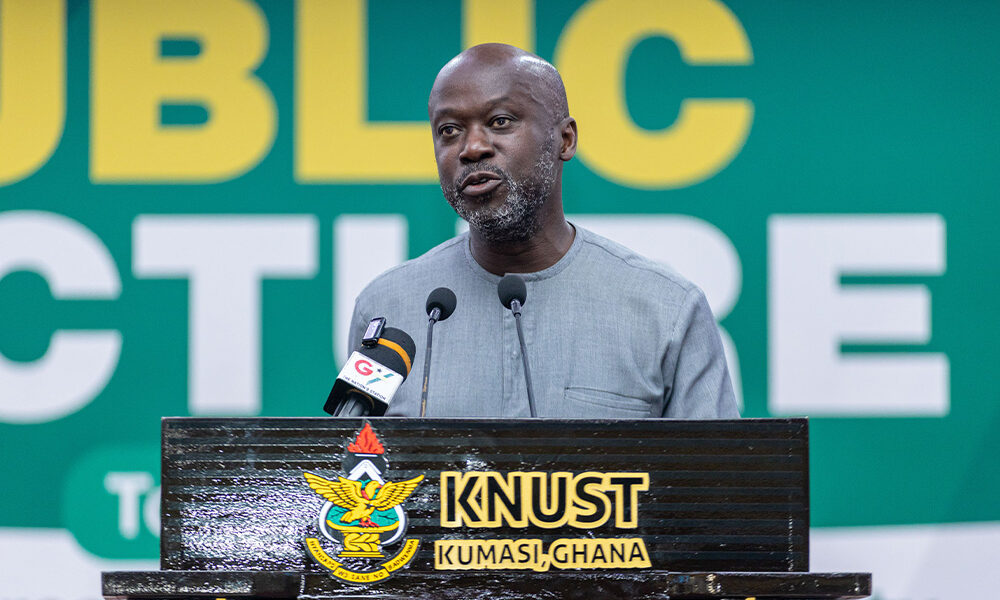
Speaking at a public lecture at the Kwame Nkrumah University of Science and Technology (KNUST), Sir David said the architectural team had not previously been given sufficient opportunity to explain the thinking behind the controversial project.
“I know that this project has caused a lot of heartache with lots of people. But let me just tell you how we thought about it because I don’t think anybody has given us a chance to explain what this project is for us as architects,” he said.
According to him, the cathedral was conceived as a long-term national investment capable of positioning Ghana as a leading destination for religious tourism, which he described as one of the world’s most enduring drivers of economic growth.
“One of the most enduring and most productive injections of GDP into a country is religious tourism,” he noted.
Sir David explained that the project was designed to go beyond religion by incorporating public infrastructure and community facilities that would contribute to Accra’s development and serve a wider segment of society.
The proposed complex included a music school, conference facilities, a library, wedding chapels, a Bible museum, educational centres, and social support facilities.
“It can’t just be for the religious community. It has to be for the communities in Accra to want to use it,” he said.
He also revealed that the project featured plans for a large biophilic park and garden aimed at providing much-needed green public space in Accra, which he argued has experienced rapid urbanisation without corresponding investment in nature-focused infrastructure.
The architect further disclosed that the design included a crypt dedicated to national heroes, as well as architectural elements inspired by traditional Akan symbolism and broader African spatial concepts.
According to Sir David, the cathedral would have become a distinctive landmark on Accra’s skyline.
“The funny thing about the building is that we think it is a small building. It actually would be the tallest building in Accra,” he said.
He added that the complex was designed to accommodate up to 25,000 people during major events and international gatherings, creating a unique destination for both residents and visitors.
“There is nothing like it. It would make a unique destination in Ghana, in Accra,” Sir David stated.
His remarks provide one of the most detailed public explanations to date of the vision behind the National Cathedral project, which remains one of the most debated public infrastructure initiatives in Ghana’s recent history.