

Associate Professor of Political Science at the University of Ghana, Professor Lloyd Amoah, has cautioned African countries about the growing threat of what he termed “digital imperialism”, urging governments to avoid excessive dependence on foreign technologies in shaping development models.
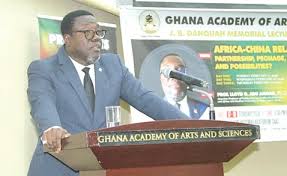
He issued the warning during the 2026 JB Danquah Memorial Lecture Series, organised by the Ghana Academy of Arts and Sciences in Accra from February 17 to February 20, 2026. The lecture series was held under the theme “Africa–China Relations: Partnership, Peonage, Pawnage and Possibilities?”
Speaking on the second day of the event, Professor Amoah explained that digital imperialism represents a modern form of external control driven by global telecommunications systems and internet infrastructure.
“Through my research over the years on this subject, I coined the term ‘digital imperialism’ to mean the contemporary instantiation of imperialist tendencies enabled by the internet and wider globe-trotting telecommunications infrastructure,” he stated.
According to him, Africa’s continued reliance on foreign technologies without building indigenous digital capabilities could undermine the continent’s long-term socio-economic transformation.
“This phenomenon of us, as a continent, not utilising our technical human resources to develop context-specific technologies for our socio-economic transformation poses a bigger risk to our future if nothing substantial is done, policy-wise, by our leaders in the region,” Professor Amoah added.
In her closing remarks as Chair for the second day of the lecture series, Emerita Professor Takyiwaa Manuh urged African countries to adopt a more strategic and cautious approach when negotiating partnerships with foreign governments and corporations.
“It is true to our values and principles that we, as conscientious citizens of Africa, must begin demanding that our elected representatives act responsibly in how they trade our resources for a few dollars under the guise of building economic and political alliances,” she said.
She further stressed the need for African leaders to draw lessons from past experiences where unequal partnerships hindered the continent’s development.
“The next generation of leaders must draw from the experiences of their forebears on how weak and unequal alliances stagnated Africa’s forward march to prosperity for such a long time,” Professor Manuh noted.
The lecture series attracted a wide audience, including students from Accra Girls’ Senior High School, Presbyterian Boys’ Senior High School (Legon), and Labone Secondary School, as well as senior and junior members of the Ghana Academy of Arts and Sciences, media practitioners and members of the public.