


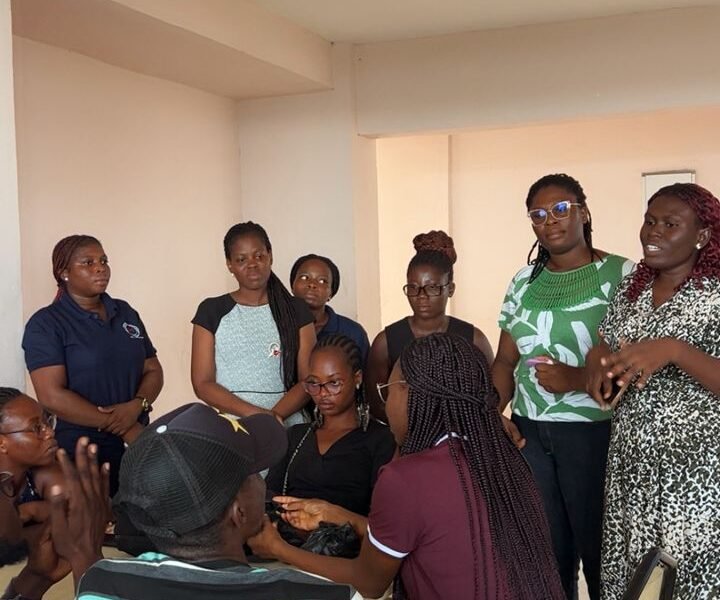
Level 300 students of the Department of Integrated Home Economics at the University of Education, Winneba (UEW), have embarked on a campus-wide public education campaign to promote proper handwashing practices as part of activities marking World Food Safety Day 2026.
Observed annually, World Food Safety Day raises awareness about the importance of safe food practices and encourages collective action to prevent, detect and manage food safety risks. The day serves as a reminder that food safety is a shared responsibility requiring the commitment of governments, institutions, businesses, food handlers and consumers alike.
Under the theme “Promoting Proper Hand Washing Practices to Improve Food Safety Among Students,” the UEW students took the campaign beyond the classroom by visiting halls of residence, lecture halls, study groups and food vending areas to educate students through one-on-one interactions, practical demonstrations and group discussions.
The campaign focused on encouraging students to wash their hands with soap before eating, before handling food and after using the toilet. Participants were also educated on the appropriate use of alcohol-based hand sanitisers whenever soap and water were not readily available.
Speaking in an interview, the group leader, Cynthia Gabiso, said the campaign was inspired by unsafe food-related behaviours observed on campus.
“We noticed that many students rush from lectures to buy food without washing their hands. Although soap was available at some food vending points, many students simply wiped their hands on their clothes or ate without washing them. We realised there was a gap between knowing that handwashing is important and actually practising it. That made handwashing the obvious focus for our World Food Safety Day campaign,” she said.
The students explained that poor hand hygiene remains one of the leading causes of food contamination, as dirty hands can transfer bacteria, viruses and other harmful microorganisms to food, increasing the risk of foodborne illnesses such as diarrhoea, typhoid fever and cholera.
To make the campaign engaging, the students adopted interactive educational approaches instead of conventional lectures.
According to Ms Gabiso, the team used practical demonstrations, discussions, question-and-answer sessions, posters, flyers and visual aids to encourage active participation.
“We wanted the campaign to be practical and interactive. Instead of long talks, we demonstrated proper handwashing techniques and encouraged students to practise the seven steps of handwashing themselves. Making the sessions participatory helped students understand and remember the key messages,” she explained.
The intervention also highlighted the science behind effective handwashing.
“Many people think soap kills germs, but what it actually does is loosen germs from the skin so they can be washed away with water. We also emphasised that washing hands for at least 20 seconds is important because it gives enough time to clean areas people often miss, such as between the fingers, the thumbs and under the fingernails,” she noted.
The campaign reached students across the university community and encouraged behavioural change through practical demonstrations and peer-to-peer education.
According to the students, participants reported improved understanding of proper handwashing techniques and expressed their willingness to adopt the practice consistently.
Despite challenges such as limited implementation time, financial constraints and the reluctance of some students to participate, the team successfully carried out the campaign by using simple educational materials and engaging students during break periods.
Ms Gabiso said sustaining the gains made during the campaign remains a priority.
“We want this to become a lasting habit rather than a one-day campaign. We are encouraging students to become food safety ambassadors by promoting proper handwashing among their peers. We also hope similar awareness campaigns will be organised regularly to reinforce safe food handling practices across the university community,” she said.
The students recommended the provision of additional handwashing facilities across campus and called for regular food safety education programmes to reinforce healthy hygiene habits among students.
The campaign concluded with a simple but powerful message: “Clean Hands, Safe Food, Healthy Life,” urging every student to wash their hands with soap before eating, before preparing food and after using the toilet to help reduce food contamination and build a healthier university community.