


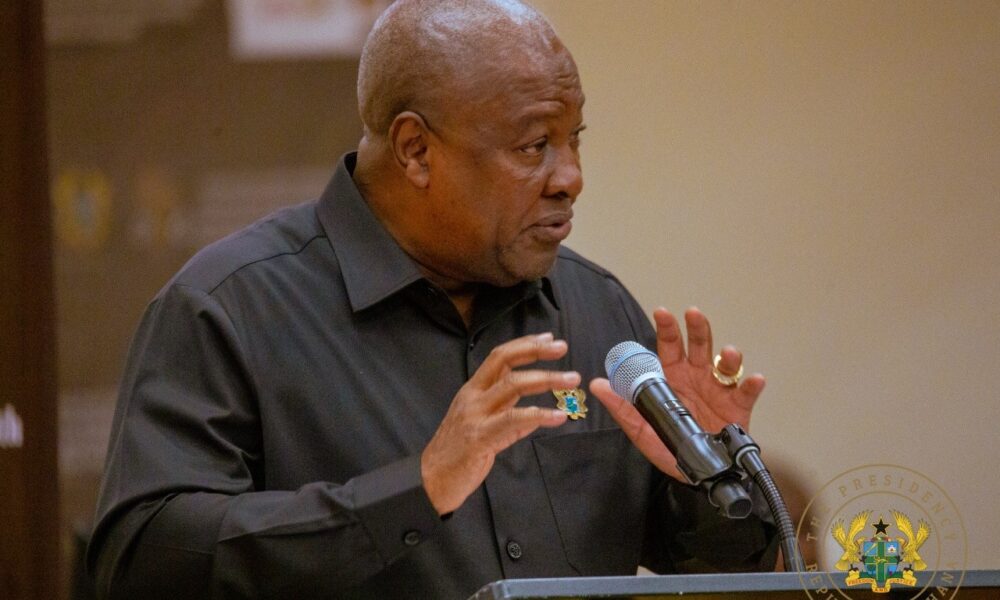
President John Dramani Mahama has announced that government is close to unveiling a new labour law to protect workers in the gig economy, remote work and digital platforms, as part of broader efforts to modernise Ghana’s labour system and respond to changing work patterns.
Speaking at the 2026 May Day celebration in Koforidua, the President said the new bill is intended to ensure that workers in emerging sectors are not excluded from legal protection and social benefits.
“We are nearing completion of a new labor bill that addresses modern trends like remote work, the gig economy, and digital platforms,” President Mahama said.
He explained that the proposed law would guarantee protection for workers regardless of where they work or the kind of platform they use.
“This adaptation will ensure that every worker regardless of sector or geographical location gains protection, fair contracts and access to benefits such as secure pensions and clear rights,” he stated.
President Mahama said the new legal framework forms part of the wider Resetting Ghana Agenda, which aims to make the economy more inclusive and prepare it for the future of work.
“Our resetting Ghana agenda ensures that whether you work in an office or you work with an app, your rights are protected, your pension is secure and your dignity is non-negotiable,” he said.
He further highlighted the government’s 24-hour economy policy, which has already been approved by Parliament, describing it as a major step towards industrial transformation and job creation.
“The 24-hour economy policy recently approved by Parliament is a flagship of our growth strategy,” President Mahama said.
According to him, the policy will allow businesses to run multiple shifts and receive government support to improve productivity.
“We are moving beyond the 8-hour workday and the manufacturing sector will provide tax and other incentives to industry and reduce power costs for companies that operate multiple work shifts,” he stated.
The President said the labour reforms and the 24-hour economy policy are both meant to expand job opportunities, modernise the economy and ensure that growth benefits workers across all sectors.
The announcement is expected to be of particular interest to young people working in freelance jobs, digital services, ride-hailing, delivery work, online businesses and other flexible employment arrangements that often fall outside traditional labour protections.
With more Ghanaians moving into technology-driven work, the proposed labour law is likely to shape how workers’ rights, contracts and benefits are defined in the country’s changing economy.