


The Kwame Nkrumah University of Science and Technology (KNUST) is set to establish a University Court to adjudicate institutional disputes under its newly launched University Act 2025, marking a major shift toward formalised legal processes in the university’s internal governance.
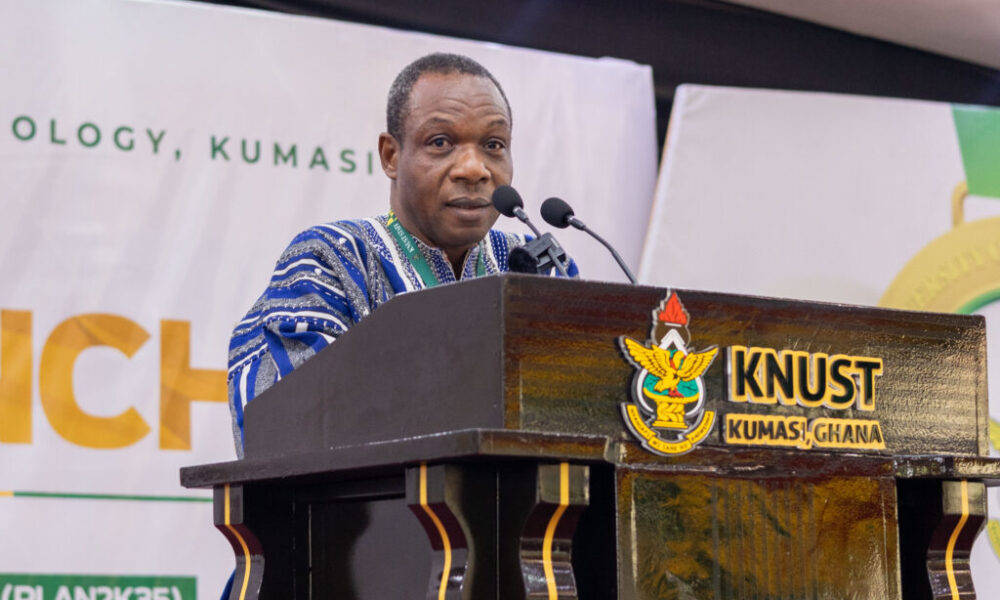
The provision was disclosed by Chairman of the Act and Statutes Committee, Professor John Tiah Bugri, during the launch of the Act and KNUST’s Corporate Strategic Plan, PLAN2K35. According to him, the new law “provides for the establishment of a University Court, to be headed by a highly reputable judge,” to handle disputes arising within the institution.
The move introduces a structured judicial mechanism for resolving conflicts that were previously addressed through administrative or ad hoc arrangements, and signals an effort to strengthen accountability, due process and institutional stability.
Professor Bugri explained that the University Court forms part of broader governance reforms under the Act, which also expand representation on the University Council and Academic Board to enhance participation in decision-making. He said the changes are intended to modernise the university’s governance framework in line with contemporary demands on tertiary institutions.
The Act further introduces administrative and compliance reforms, including mandatory signing of the matriculation register by students, with failure to do so resulting in disqualification from graduation. In addition, the tenure of the Registrar and Finance Officer has been reduced from five to four years, although current office holders will complete their existing terms.
Chairman of the University Council, Akyamfuo Asafo Boakye, described the launch of the Act as a defining moment for the institution, saying, “Institutions that wish to remain relevant must be willing to innovate,” and adding that the reforms would serve as a catalyst for development.
The establishment of the University Court aligns with the ambitions outlined in PLAN2K35. Chairman of the Strategic Plan Committee and Pro Vice-Chancellor, Professor David Asamoah, said the strategy positions KNUST to respond to emerging global realities such as technological disruption and climate change, while strengthening governance and institutional effectiveness.
Vice-Chancellor Professor Rita Akosua Dickson said the new Act responds to the evolving demands placed on universities and emphasised the importance of implementation. “KNUST does not want to hallucinate, we want to get the job done,” she said, urging staff, students and stakeholders to support the reforms and translate policy into action.
The University Act 2025 and PLAN2K35 together set the legal and strategic framework that will guide KNUST’s governance, dispute resolution and development agenda in the years ahead.