

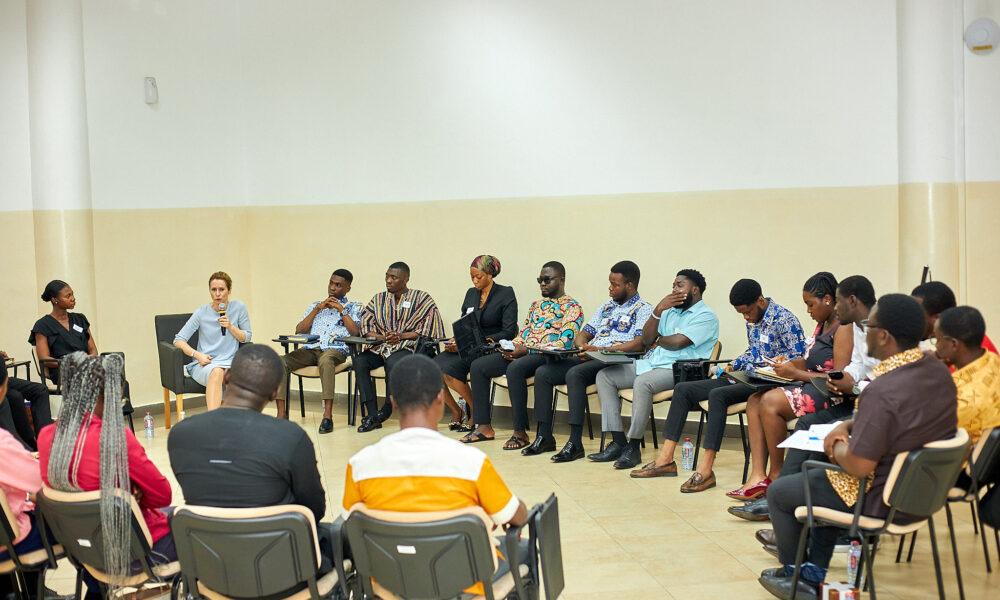
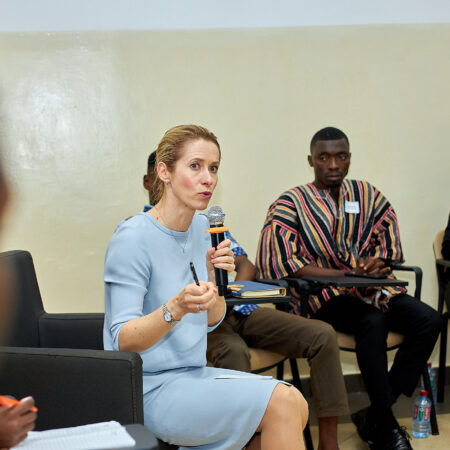
The High Representative for Foreign Affairs and Security Policy of the European Union, Kaja Kallas, has engaged student leaders of the University of Ghana in a high-level dialogue focused on youth opportunities, climate change and global governance.
The interaction brought together leaders from the Students’ Representative Council (SRC) and the Graduate Students’ Association of Ghana (GRASAG), providing a platform for direct engagement on key global and development issues.
Speaking during the session, H.E. Kallas emphasised the need for a stronger and more balanced partnership between Europe and Africa, particularly in areas of investment and economic cooperation.
“What we want is a partnership that creates prosperity here,” she said. “The technology and know-how can come from Europe, but the jobs and value from resources should remain in African countries.”
She noted that although the European Union may not be a dominant military force, it remains a major global economic player and one of Africa’s largest investors and trading partners.
Students used the opportunity to raise concerns about global power dynamics, investment opportunities and the role of young people in shaping EU-Africa relations.
In response, H.E. Kallas encouraged students to take an active role in influencing global partnerships, describing Africa’s youthful population as a key strength.
“You bring innovation, ideas and perspectives about how the future should be designed. This relationship must work both ways,” she said.
Climate change emerged as a major issue during the discussion, with the EU official warning of its growing impact on migration, poverty and conflict.
“If you are worried about migration, you should also be worried about climate change,” she stated, highlighting the link between environmental challenges and displacement.
She added that the European Union is keen to strengthen cooperation with Ghana in areas such as green energy, climate technology and digital transformation.
Welcoming the delegation, the Dean of Student Affairs, Prof. Rosina Kyerematen, said the engagement reflects the strong partnership between Ghana and the European Union, particularly in education, job creation and sustainable development.
She noted that such interactions are important in preparing students to become globally minded leaders capable of addressing complex challenges.
The dialogue forms part of broader efforts by the European Union to deepen cooperation with African countries, while also promoting youth involvement in global policy discussions.
No Comment! Be the first one.