

The National Development Planning Commission (NDPC) says it is working towards a more inclusive and widely accepted national development plan after consultations across all 16 regions revealed deep concerns about inequality, weak infrastructure and poor coordination in development planning.
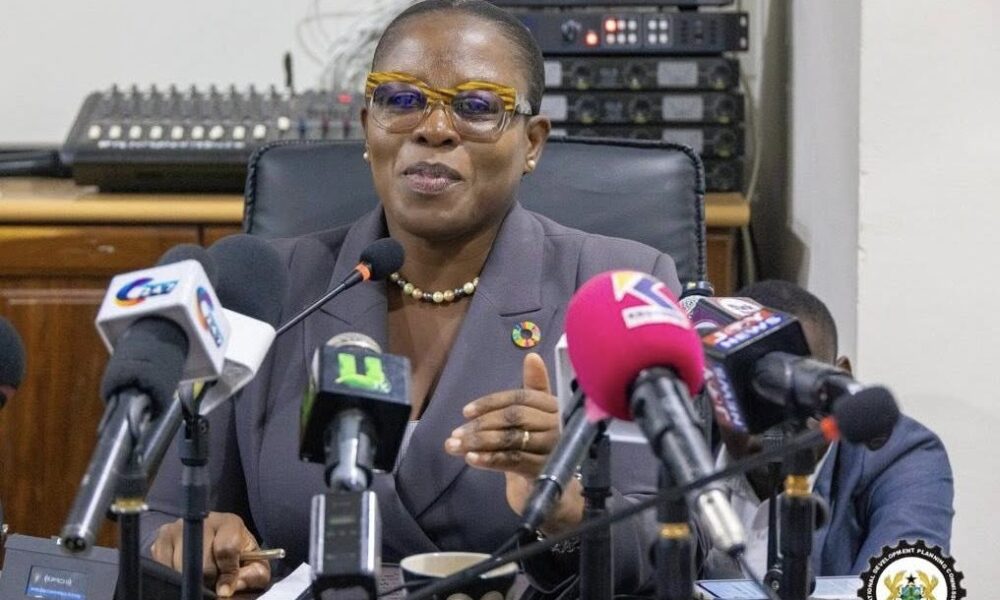
At a media briefing in Accra on Wednesday, April 29, 2026, the Director-General of the NDPC, Dr Audrey Smock Amoah, said the Commission’s stakeholder engagement found that many communities feel left behind because of infrastructure gaps, overlapping development plans and what they see as unfair distribution of resources.
According to her, the findings have strengthened the need for a Consolidated National Development Plan built on national consensus and local realities.
Dr Amoah said the NDPC has been engaging district, municipal and metropolitan planning officers, traditional leaders and other regional stakeholders to ensure that local priorities are reflected in the broader national framework under the Resetting Ghana Agenda.
She identified weak agricultural value chains, youth unemployment and climate vulnerability as some of the common development challenges raised during the consultations.
She said these concerns must be fully captured within the country’s five main development areas, namely economic development, social development, governance and institutional development, environmental, infrastructure and spatial development, and international relations.
Dr Amoah stressed the need for stronger collaboration between local assemblies and traditional authorities, saying development planning would be more effective if both sides work closely together.
She also called for improved monitoring systems and stronger long-term planning frameworks to help reduce policy inconsistency and ensure continuity in national development efforts.
Reaffirming the Commission’s role, she explained that district-level development plans feed into the national plan and that certification would depend on whether identified gaps have been properly addressed.
She added that the NDPC is reviewing its operational guidelines to make regional and district planning more practical, effective and results-driven.
Beyond policy and technical reforms, Dr Amoah said Ghana also needs a change in attitudes towards governance and national development.
She called for stronger partnerships with civic education institutions to help build positive values from an early age and urged the media to play a more active role in promoting development messages, exposing bad practices and highlighting success stories.
She cited the Volta Region’s cleanliness as one example of a positive model that deserves national attention.
Dr Amoah said Ghana’s development planning must reflect both the country’s shared aspirations and the different realities across regions if growth is to be inclusive and sustainable.